Posts

Showing posts with the label training

A4H Video

Image
The new video from Astronauts4Hire is now available. It showcases much of the commercial astronaut training I have been doing with the organization and explains how A4H provides educational, training, and research opportunities to support the growth of a commercial astronaut workforce. Watch it on YouTube or just click below: Special thanks to Oceans Aloft and Rusty Rogers for filming and producing the video. A4H training partners Survival Systems USA , SIRIUS Astronaut Training , and the NASTAR Center generously allowed us to shoot the footage at their facilities. Additional footage comes from the parabolic flight campaign I helped carry out testing a biomedical monitoring system in microgravity with A4H research partner Vital Space .
I am a pilot

Image
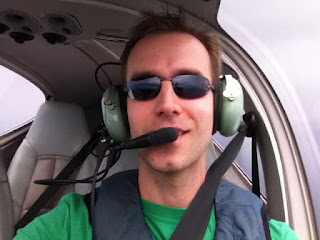
With the Olympics currently unfolding, we are reminded how athletes train very hard for their one chance at nailing a performance to achieve their long-sought goals. I have been undergoing my own intensive training regime for the past several months to earn a Private Pilot Certificate . Like those athletes, I too have been gearing up for the one performance that really counts; in my case that means passing the FAA checkride with a Designated Pilot Examiner who has the authority to grant me the pilot license. That checkride happened earlier today, and I am proud to say I am now a Private Pilot. For me, this achievement is like winning the gold medal, vindicating months of hard work and sacrifice. I am grateful to my CFI Scott and the entire staff of Galvin Flight Services Hawaii for their tutelage, but most of all, I thank my wife for her patience throughout this intense training period. Aviation goes back a few generations in my family to my great-grandfather who flew in t...

My First Microgravity Experience

Image
When I was in middle school, I had the opportunity to visit Space Camp in Huntsville, Alabama. The first thing I did when I got there was ask where the zero gravity room was. Unfortunately, it turned out that such a room didn't exist, but I learned that astronauts do train in zero gravity aboard parabolic flights . Ever since I have wanted to get on one of those flights to experience the freedom of floating in microgravity and better appreciate what it takes to train as an astronaut. Now that dream has come true. There are two ways one can get on a parabolic flight. If you have a few thousand dollars to burn, you can purchase a flight as a tourist with the Zero Gravity Corporation for 15 parabolas - or about 6 minutes - of reduced gravity fun. I was tantalizing close to making that happen in 2010, but it just didn't work out. The other way to fly in microgravity is to get involved with a research or education program requiring parabolic flight. If you are a K-12 te...

Suborbital Scientist Training

Image
I've just been to space and back, at least that's what it feels like. Having completed emergency egress and sea survival training last week, my fellow Astronauts for Hire and I next made our way to The NASTAR Center in Southampton, Pennsylvania just outside Philadelphia.  There, we spent three days undergoing the Suborbital Scientist Training Program , which provides a good foundation in space physiology for prospective scientist-astronauts.  Following the NASTAR program, we went to the Ashton Graybiel Spatial Orientation Laboratory to learn how unusual force environments affect the body's vestibular system . Day 1 Following a tour of the NASTAR Center, we spent the morning of the first day in the classroom learning about human physiology at high altitude.  For the most part, we focused on how the low oxygen conditions of the upper atmosphere can lead to hypoxia .  This prepared us for the afternoon activity where we took a ride in NASTAR's hypobaric chambe...

Ditching, Dunking, and Surviving

Image
I've been busy this past week training at Survival Systems USA in Groton, CT.  Completing Dunker Training and Sea Survival courses has prepared me and my fellow Astronauts4Hire (A4H) candidates well for emergency situations involving water landings, which are the most common spaceflight abort contingency scenarios.  Here's what we've done so far: Day 1 After half a day of classroom instruction on emergency preparation, we practiced inversion dunking in the Shallow Water Egress Trainer (SWET).  While this may seem like some type of waterboarding torture device, the SWET is actually a very important trainer for helping one confront the fear of drowning in order to remain calm and safely egress a submerged aircraft.  I learned that I can experience quite a lot of anxiety before being dunked upside down underwater, so this training was important for me to learn how to manage that apprehension so I could get myself to safety.  

This Astronaut for Hire Needs Your Help

Image
Two years ago, I asked for your help to raise money for the FMARS expedition. You responded with generous donations that helped reach more than half of my goal.  Now I need your help again.  Please consider donating to my Astronaut Training Fund so I can take the next step important step in my professional development as a prospective astronaut. Almost everyone has dreamed of floating in space above the majestic Earth.  Until recently becoming an astronaut was reserved only for the most elite test pilots, engineers, and scientists.  Now, the emerging private spaceflight industry will bring space into reach for many more people.  These spacecraft will need highly trained crews to manage experiments and payloads since science, in addition to tourism , will be a major driver of of the new industry. With a well-rounded scientitic resume , I have a real shot at becoming an astronaut.  After all, in 2009 I made it to the Highly Qualified round (top 3-12%...

Triathlon Tribulations

Image
Last weekend I participated in the Fire Cracker Sprint Triathlon at Kaleoloa near my home on O'ahu.  It was my first triathlon in 9 years, so I was a little apprehensive about it. With an official time of 1:22:49, I think did pretty well considering I hardly trained prior to the event and got hit by a car during the bike portion.  It was a lot of fun, and I may start doing the multi-sport race more often from now on. The race consisted of a 500 m swim, a 20 km bike, and a 5 km run.  I'm really cold-natured when it comes to swimming, so I was a little worried about the 6:00am start time.  To my relief, the water temperature felt very comfortable for the 15 minutes I was in it.  Swimming has never been my favorite activity, despite being on my hometown's swim team for two years when I was a kid.  The freestyle stroke zaps my energy very quickly, so I always end up reverting to breast stroke when I swim, and this triathlon was no exception.  With ...